
Your furnace needs work. Paying for the repair would get the heat back on, but replacing it could be an opportunity to make a bigger change: a different heating system, air conditioning for summer, or relief from problems you have tolerated for years.
For Seattle homeowners, the decision comes down to what the repair will resolve and whether replacement would improve comfort enough to justify the added cost.
This guide explains when a furnace is worth repairing, when replacement makes more sense, and how a heat pump could meet your home’s heating and cooling needs. It also covers installation costs that can affect the total you pay.
A Furnace Repair and a Heating Upgrade Accomplish Different Things
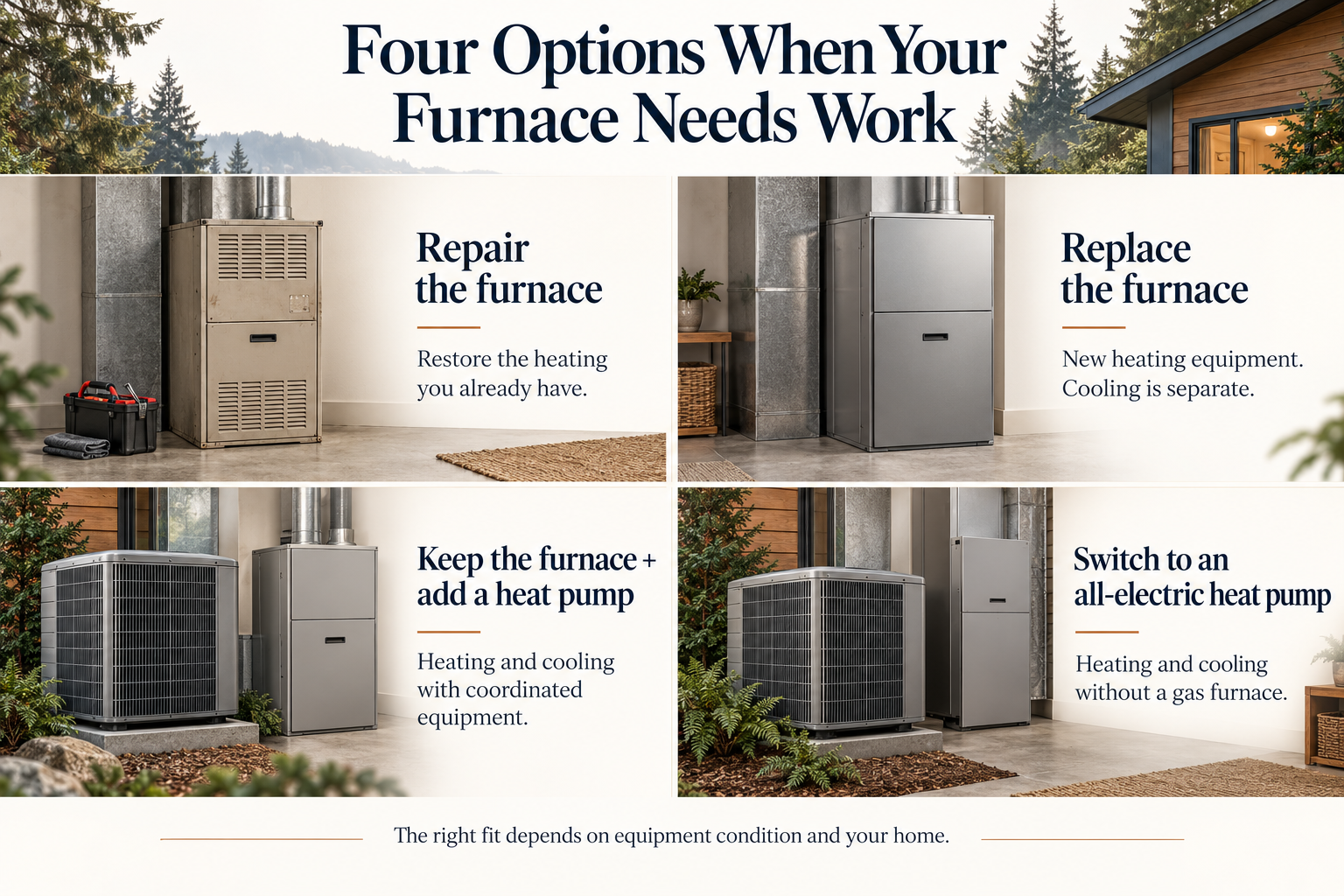
Repair preserves the heating arrangement you already have. Replacement may preserve it too, or change it considerably.
For a Seattle home with a gas furnace, the possibilities can include:
| Option | What the investment accomplishes | What remains to consider |
|---|---|---|
| Repair the furnace | Restores the existing heating equipment | Its remaining condition and any unresolved comfort problems |
| Install another furnace | Renews the furnace while retaining fuel-burning heat | Cooling remains a separate need unless the project includes it |
| Pair a compatible furnace with a heat pump | Adds electric heating and cooling while retaining the furnace for designated conditions | Equipment compatibility and controls that coordinate both heat sources |
| Convert to an all-electric heat pump | Provides heating and cooling without using a gas furnace | Heating capacity in cold weather and any required electrical or duct changes |
If your furnace has kept your home comfortable and an affordable repair can restore reliable operation, keeping it may be the better use of your money. A new system needs to offer enough benefit to justify the additional cost.
Replacing a furnace and switching to a heat pump also provide different benefits. A new furnace supplies heat; a heat pump provides both heating and air conditioning. For a Seattle home without cooling, that added summer comfort can be a substantial reason to consider the switch.
When Is a Furnace Worth Repairing?
Repair often makes sense when one failed part is causing the problem and the rest of the furnace is in good condition.
A furnace that will not start may have a faulty ignitor, sensor, or thermostat. Those problems can leave your home without heat, but they do not necessarily mean the furnace needs replacement. Fixing the failed part may be enough to restore dependable heating.
The condition of the remaining equipment helps determine whether that repair is worth the cost. If the blower that circulates air and the heat exchanger that transfers heat are still working properly, repairing a separate component can be a reasonable investment. Several worn or failing parts make the outlook less certain. Maintenance records and previous repair findings help show whether this is an isolated breakdown or part of a recurring problem.
Brennan’s furnace repair team in Seattle diagnoses the cause of heating failures and evaluates the equipment’s condition, helping you understand what a repair would resolve.
Age Changes the Financial Risk
A repair on a relatively young furnace may preserve many useful years of heating. The same expense on an older furnace comes with greater uncertainty about what will need attention next.
ENERGY STAR identifies furnaces over 15 years old as candidates for a replacement evaluation. That is a planning reference, not a prediction of when failure will actually happen. Equipment age becomes more informative alongside its condition and repair history.
A 16-year-old furnace with a sound heat exchanger and one manageable fault can remain worth repairing. A furnace of the same age with recurring failures presents a less reassuring investment, particularly when the proposed work would leave other deteriorated parts in place.
How Warranty Coverage Affects Repair Costs
A furnace warranty may cover the replacement part, which can substantially reduce the cost of a repair. You may still need to pay for the diagnostic visit and labor to install it, depending on the warranty’s terms.
The amount you would pay after warranty coverage is what matters when comparing repair with replacement. An expensive part does not always mean an expensive repair for the homeowner, especially when that part is still covered.
When Replacement May Be the Better Investment
Replacement becomes more appealing when fixing one problem would still leave the furnace needing other significant repairs.
A new blower motor, for example, can restore airflow, but it will not fix a damaged heat exchanger or a separate problem with how the furnace burns fuel. When several major components are deteriorating, replacing the furnace may offer better value than paying to repair them individually.
Repeated breakdowns also affect the decision. Even affordable repairs become frustrating when your home keeps losing heat. A history of equipment failures gives you more reason to consider replacement than service calls caused by thermostat settings or a clogged filter.
A Cracked Heat Exchanger Requires Immediate Attention
The heat exchanger keeps combustion gases separate from the air circulated through your home. A confirmed crack is a safety concern, and the furnace should remain off until a qualified professional determines how to restore safe operation.
Replacing the heat exchanger may be an option, especially if warranty coverage reduces the cost and the rest of the furnace is in good condition. For an older furnace with additional problems, replacing the entire unit may be the more reasonable investment.
If your carbon monoxide alarm sounds, leave the home and call 911 from outside.
Facing a major furnace repair? Schedule service with Brennan to find out what has failed and whether repair or replacement makes more sense for your home.
Would a Heat Pump Change the Value of Replacement?
Replacing a furnace with another furnace is often a familiar comparison. A heat pump introduces a different benefit: the same equipment can heat the home and provide air conditioning.
For a Seattle household without permanent cooling, that addition can be a meaningful part of the purchase. It should be valued separately from any projected heating savings. Adding a service the home did not previously have can increase summer electricity use even when the new equipment heats efficiently.
Brennan’s heat-pump installation service includes an assessment of the home’s heating and cooling requirements, equipment selection, and system testing.
Can You Add a Heat Pump and Keep Your Furnace?
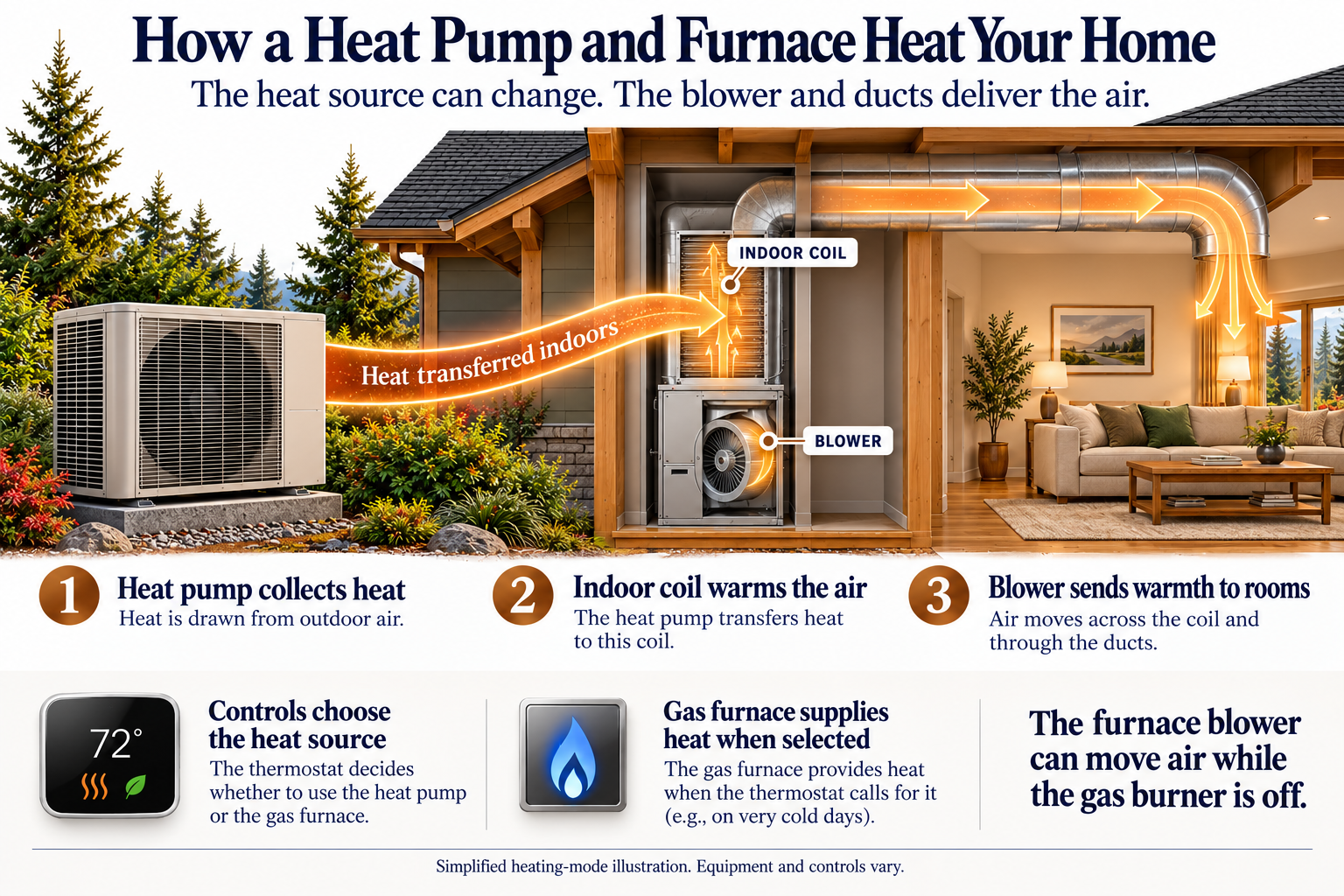
A furnace that still works well may be able to stay in place when you add a heat pump. Together, they form a dual-fuel or hybrid system, giving the home electric heating and cooling while retaining gas heat.
The controls determine which equipment provides heat. The heat pump can handle heating during milder weather, while the furnace takes over when the system is set to use gas heat, often during colder conditions. The changeover point depends on the equipment’s heating capacity and how the system is designed for the home.
This can be a practical way to add air conditioning while keeping a furnace that has useful life remaining. However, the furnace’s blower must provide enough airflow for the new equipment, and the indoor coil and controls must be compatible. A working furnace does not automatically meet those requirements.
Operating costs also depend on how much each heat source runs. As PSE explains in its hybrid-system guidance, using less gas means using more electricity, so savings depend partly on the rates charged for both.
What If Your Home Doesn’t Have Ductwork?
For a home heated by electric baseboards or wall heaters, installing a central heating and cooling system could mean adding ducts throughout the house. A ductless heat pump offers another option: an outdoor unit connected to indoor units that heat and cool individual rooms or areas.
The layout determines how much of the home the system can comfortably serve. A unit in the living room may work well for an open main floor, while bedrooms separated by hallways or closed doors may need their own indoor units. Whole-home comfort depends on placing equipment where it can reach the spaces people use.
Brennan’s ductless heating and cooling systems can provide an alternative when adding or rebuilding ductwork would make a larger installation impractical.
The House Can Need Work Even When the Furnace Does Not
A cold room does not establish that the furnace needs replacement. Heat may be escaping from that room, or too little heated air may be reaching it.
In a house with ducts passing through a crawlspace or attic, leakage can waste conditioned air before it reaches the living space. Return-air restrictions can also affect how well the system circulates air. Installing new equipment while retaining those problems can produce disappointing results.
ENERGY STAR’s duct guidance connects duct leakage with higher bills and difficulty maintaining comfort. Brennan offers Aeroseal duct sealing, including leakage testing before and after the work.
Duct improvements can support either decision. They may help a repair deliver better results from the existing furnace, or allow replacement equipment to perform as intended.
What Does a Heating Replacement Include?
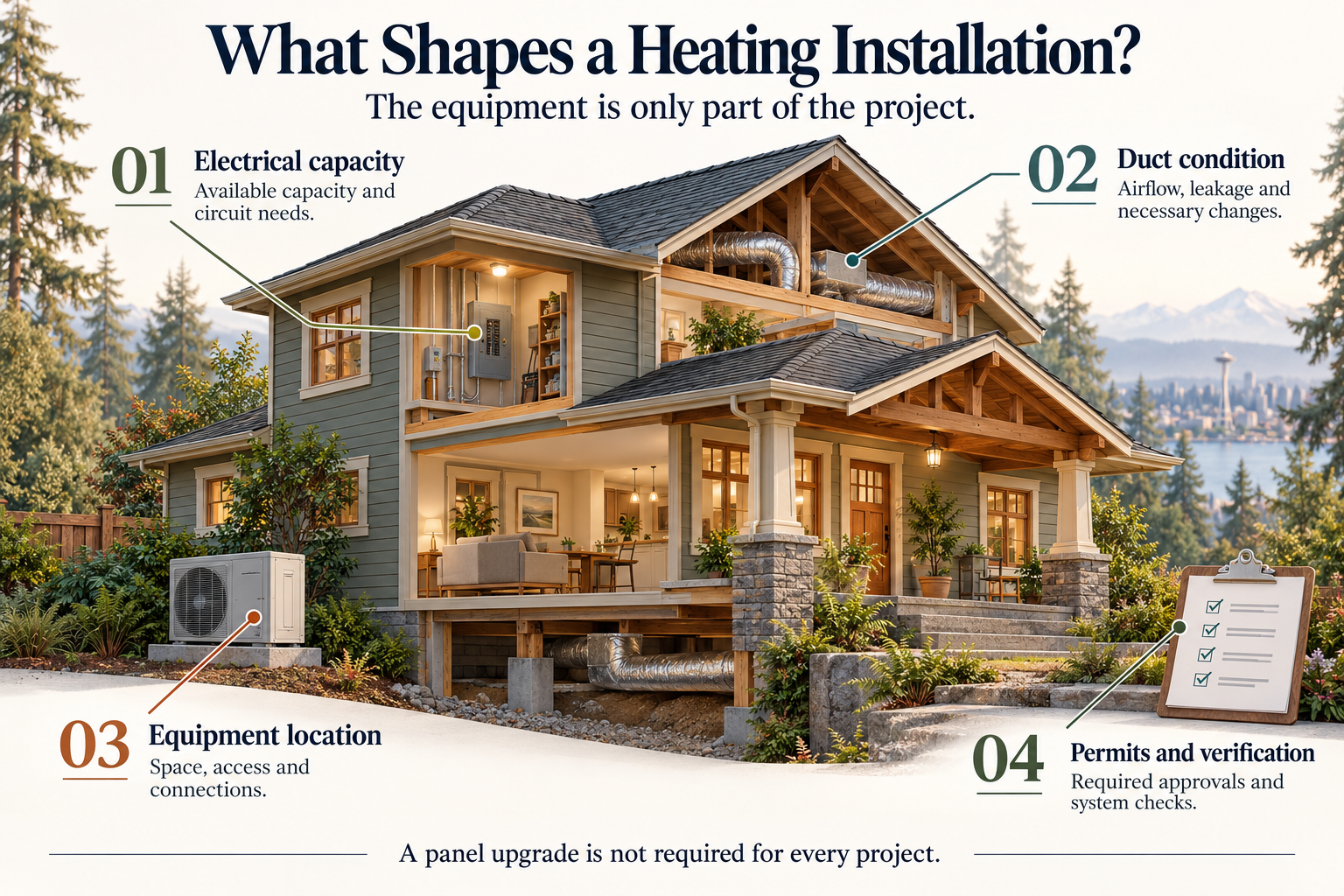
The cost of replacing a heating system includes the equipment and the work needed to install it properly. Electrical changes and permit requirements can affect the total, especially when switching from a furnace to a heat pump.
Electrical Work Depends on Your Home and Equipment
A heat pump may need a new electrical circuit. Some homes also need a panel or electrical-service upgrade, but that is not required for every installation.
The deciding factors are how much electricity the new system requires and whether the home can safely support that additional demand. An older house may have sufficient capacity, while another home may need electrical changes before installation can proceed.
Brennan provides electrical-panel services when that work is necessary, allowing it to be included in the heating project’s scope and cost.
Equipment Must Match the Home’s Heating Needs
A replacement system needs enough heating capacity to keep the home comfortable during cold Seattle weather. The appropriate size depends on the home’s heat loss, including the effects of insulation, windows, and air leakage.
For a heat pump, the design also accounts for heating output as outdoor temperatures fall. If supplemental heat is needed, the proposal should explain what will provide it and how the controls will manage it. A high efficiency rating alone does not establish whether the equipment can adequately heat the home.
A larger furnace is not automatically better, either. Oversized equipment can heat the house quickly and shut off repeatedly, contributing to uneven temperatures. Brennan uses load calculations as part of its furnace installation process to help match equipment capacity to the home.
Permits and Inspections Are Part of the Installation
Seattle requires permits for furnace replacement and split-system heat-pump installations. Electrical work may require a separate permit.
A complete installation proposal identifies the applicable permits, associated costs, and required inspections. For homes outside Seattle city limits, the requirements come from the city or county responsible for the property.
Is Replacement Worth the Additional Cost?
Repair usually costs less upfront than replacement. Paying more for a new system can make sense if it provides more reliable heating, improves comfort, or reduces operating costs enough to make the investment worthwhile.
Expected energy savings depend on what heats your home now. Replacing electric baseboards with a heat pump is a different comparison from replacing a gas furnace. A hybrid system that uses both a furnace and a heat pump needs to account for the cost of running each.
After switching from gas heat to a heat pump, your gas bill may fall while your electricity bill rises. The savings come from the difference in your combined energy costs. Adding air conditioning for the first time can also increase summer electricity use, so that added comfort belongs in the comparison.
The condition of the existing furnace matters, too. Documented wear and repeated breakdowns can make replacement more attractive. However, no estimate can reliably predict every future repair, and assuming the old furnace will need extensive work can make replacement appear more economical than it is.
Brennan’s financing options can spread the cost over time, subject to credit approval. The monthly payment affects affordability, while interest, fees, and the repayment period determine the total amount paid.
Heat-Pump Incentives for Seattle-Area Homeowners
Program information reviewed October 27, 2026.
Rebates can reduce the cost of installing a heat pump. The programs available to your household depend on your utility provider and the heating system you are replacing. Household income and equipment requirements can also affect eligibility.
The programs cover different types of projects:
- Replacing oil heat: Seattle’s Clean Heat Program supports qualifying oil-to-heat-pump conversions.
- Replacing electric baseboards, wall heaters, or an electric furnace: PSE offers an electric-resistance conversion rebate for eligible electric customers.
- Adding a heat pump alongside a gas furnace: PSE’s hybrid-system program covers qualifying installations that retain gas heating.
- Switching from gas heat to a heat pump: PSE offers a gas-to-electric conversion program for qualifying households that meet its income requirements.
Each program has its own rules, including equipment standards and contractor requirements. A rebate reduces your expected project cost only when your household and installation qualify; advertised amounts are not available to every homeowner.
Furnace and Heat-Pump Repair vs. Replacement FAQs
Should I Repair or Replace My Heat Pump?
Repair often makes sense when the problem is limited to one component and the heat pump otherwise heats and cools your home well. A thermostat fault or airflow problem does not automatically mean the equipment needs replacement.
A costly compressor or coil repair deserves a closer comparison, especially when the system has other worn components or a history of breakdowns. Warranty coverage can also reduce what you would pay to keep it running.
Brennan provides heat-pump repair for ducted and ductless systems, with diagnosis to establish what has failed and what the repair would involve.
Will Replacing My Furnace Add Air Conditioning?
Replacing the furnace alone will not add air conditioning. A furnace heats the home; cooling requires an air conditioner or heat pump.
If your home already has central AC, the replacement furnace must work with the cooling equipment being retained. If you want to add cooling, the installation price needs to include that equipment and any necessary changes to the indoor coil and controls.
Is a Repair Worthwhile If I Plan to Replace the Furnace Soon?
A modest repair can be worthwhile if it keeps your home safely heated while you plan and budget for replacement. The value comes from the useful time it provides.
An expensive repair is harder to justify when replacement is already planned for the near future. Its cost would be added to the replacement expense without providing much additional use of the old furnace.
Will I Need New Ductwork When I Replace My Furnace?
Often, the existing ducts can stay. Replacing a furnace does not automatically mean replacing the ductwork.
Duct repairs or modifications may be needed if there are leaks, damaged sections, or airflow restrictions. Switching to a heat pump also requires confirming that the ducts can carry enough air for the new equipment. Depending on their condition, targeted improvements may be sufficient.
Get a Clear Answer on Furnace Repair or Replacement
You deserve to know whether another repair is money well spent. Brennan can diagnose the problem, explain the repair cost, and help you understand whether replacement would offer enough improvement to justify the additional expense.
We’ve served Puget Sound homeowners since 1987, providing furnace and heat-pump repairs and installations backed by a workmanship guarantee. If replacement makes sense, our free in-home energy consultation gives you a clear picture of the equipment options and installation work your home needs.
Call or schedule your heating evaluation with Brennan to find out what’s wrong and get a recommendation based on your home and equipment.