
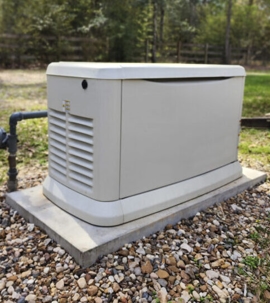
If you own a home in the Seattle area, you already know that power outages aren't a matter of if — they're a matter of when. Puget Sound Energy serves more than 1.1 million customers across western Washington, and its service territory sits squarely in the path of the Pacific storms that roll off the coast every fall and winter. In early 2025 alone, a single windstorm with gusts approaching 60 mph knocked out power for more than 100,000 households across western Washington, with tens of thousands still in the dark well into that evening. For homeowners in King County, Snohomish County, and the South Sound, backup generators have gone from a luxury to a genuine necessity.
But a generator that hasn't been properly maintained is almost as useless as no generator at all. The whole point of owning one is that it fires up on demand — often in the middle of a cold, dark November night — without hesitation. That only happens if you're taking care of it between outages.
This guide consolidates everything you need to know: why regular maintenance matters, what to check and when, Seattle-specific concerns that affect generator performance, and when it's time to call a professional.
Why Generator Maintenance Is Non-Negotiable in the Pacific Northwest
It's tempting to treat a standby or portable generator the way you might treat a fire extinguisher: install it, forget it, and trust it to be there when you need it. That approach will almost always fail you at the worst possible moment.
Unlike appliances you use every day, a generator that sits dormant for months is actually accumulating problems. Battery charge drains. Fuel degrades. Oil absorbs moisture. Seals dry out. The Pacific Northwest makes each of these issues worse: our consistently damp climate accelerates corrosion on battery terminals and electrical connections, and our cool, wet winters mean that fuel sitting in an untreated tank can break down faster than it would in a drier climate.
Consider what a neglected generator really costs you. A comprehensive annual maintenance visit typically runs $200–$400, depending on the unit's size and age. A repair bill from a generator that failed due to a fouled carburetor, dead battery, or sludged oil can easily hit $1,000–$2,000, and that assumes you catch the problem before it causes catastrophic engine damage. Replacing the unit altogether can run $3,000–$10,000+ for a whole-home standby system. PSE's outage resources recommend that homeowners have a plan for extended multi-day outages. Regular maintenance is the foundation of that plan.
The Seattle Generator Maintenance Schedule: What to Do and When
Different tasks belong on different timelines. Here's a practical breakdown organized by frequency.
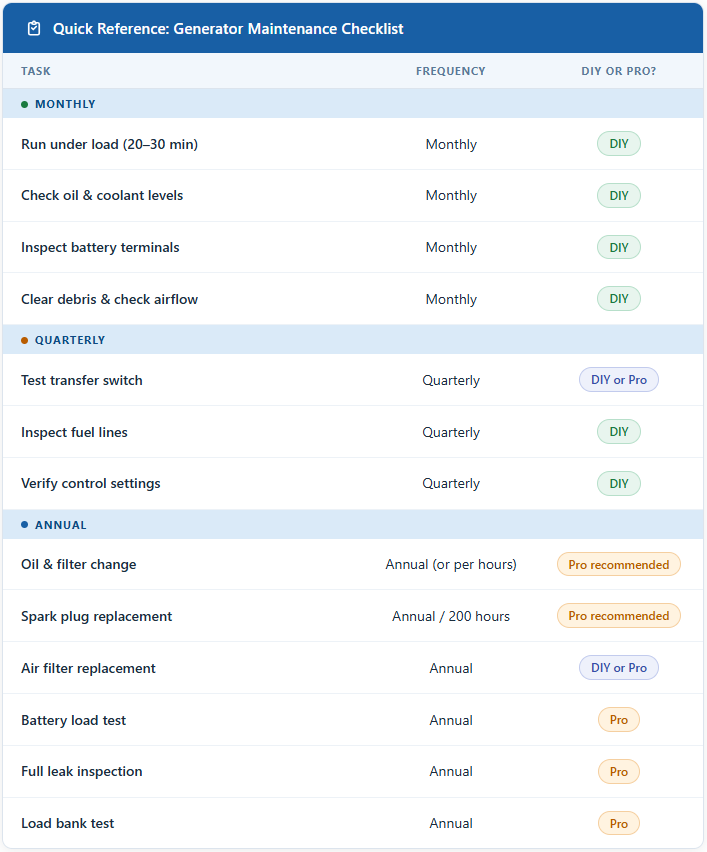
Monthly Tasks (Takes 15–20 Minutes)
- Run the generator under load. The single most important thing you can do is exercise your generator for 20–30 minutes once a month with a load on it. This keeps the fuel system from gumming up, lubricates internal components, charges the battery, and gives you an early warning if something has gone wrong. Many standby generators include an auto-exercise feature — confirm yours is programmed and running.
- Check oil and coolant levels. Pull the dipstick, wipe it clean, and verify the oil level sits in the acceptable range. Low oil can cause severe engine damage within minutes of operation. For liquid-cooled standby units, check coolant levels as well.
- Inspect battery terminals. Seattle's humidity accelerates corrosion on battery cable connections. Look for white or greenish buildup on the terminals, and clean them with a wire brush if needed. A loose or corroded connection is one of the most common reasons a generator won't start when you need it.
- Clear debris from around the unit. The wet Pacific Northwest climate means moss, leaves, and debris accumulate quickly around outdoor-mounted units. Clear at least 3 feet of clearance on all sides to ensure proper airflow.
Quarterly Tasks (Takes 30–45 Minutes)
- Test the transfer switch. The transfer switch is what automatically routes your home's power source from the grid to your generator during an outage. Run a manual test to confirm it transfers cleanly, responds to the correct settings, and switches back without issue. Problems with this component are often invisible until you're already sitting in the dark.
- Inspect fuel lines and connections. Look for cracking, swelling, or soft spots in fuel lines — a sign of degradation. Check that all connections are tight and dry. A fuel leak near an operating generator is a serious fire hazard.
- Verify control settings. Generator control panels can have settings inadvertently changed during maintenance or testing. Confirm that voltage output, frequency, and automatic start settings are still configured correctly for your home.
Annual Tasks (Professional Service Recommended)
- The annual service is when you go deep. This is the appointment where a technician catches what routine home checks miss, and it's the one most worth scheduling before storm season — meaning August or September for Seattle homeowners, not November when the storms are already arriving.
- Oil and filter change. Fresh oil matters even in a generator that hasn't logged many hours. Oil absorbs moisture during idle periods, which breaks down its protective properties over time. Change it annually at minimum, and more frequently if your unit sees heavier use. Always use the viscosity grade specified in your owner's manual.
- Spark plug inspection and replacement. A worn or fouled spark plug is a reliable path to a no-start situation. Spark plugs typically need replacement every 200 hours or two years, but an annual inspection lets a technician catch issues early.
- Air filter replacement. A clogged air filter starves the engine of oxygen, reducing efficiency and risking stall under heavy load — exactly the opposite of what you want during a multi-day outage. In Seattle's damp environment, filters can accumulate moisture in addition to particulates.
- Battery load test. A battery may show full charge while sitting idle and still fail under the load of a cold start on a January morning. A professional load test verifies that the battery can actually deliver what it needs to. Most generator batteries last 2–3 years; budget for replacement accordingly.
- Full leak inspection. A technician will check for oil, coolant, and fuel leaks — some of which produce no visible signs until the problem is advanced. Coolant leaks left unaddressed will cause the generator to overheat and shut down mid-outage. Oil leaks can signal larger issues including carbonization in the fuel injection tips or faulty crankcase breathers.
- Load bank test. Running your generator at its full rated capacity for at least one hour validates that it can actually handle the load of your home during a real outage, not just idle or partial-load operation.
Seattle-Specific Considerations That Affect Your Generator
The humidity problem
Western Washington's persistent moisture doesn't just affect outdoor equipment — it creates real problems inside a generator that sits dormant for months. Battery terminals corrode faster here than in drier climates. Fuel tanks can accumulate condensation. Electrical connections inside the unit are exposed to ambient humidity every time the weather shifts. Adding a quality fuel stabilizer when the generator isn't in regular use, and using dielectric grease on electrical connections, goes a long way toward preventing these issues.
Storm season timing
The window between late October and February is when Puget Sound is most vulnerable to the atmospheric rivers and windstorms that cause widespread outages. That means September is the ideal month for your annual professional service — it gives you time to address any issues discovered before storm season arrives. Procrastinating until November is a gamble.
Fuel management for multi-day outages
Puget Sound storms don't always resolve quickly. When widespread tree damage takes down distribution lines across multiple neighborhoods, repair crews face a multi-day restoration effort. PSE's own outage resources note that major storms can require 24 hours or more just to assess damage before restoration begins. Seattle-area homeowners should keep generator fuel stocks — and the necessary oil and filters — sufficient for at least 72–96 hours of continuous operation.
CO safety
Carbon monoxide poisoning claims lives every year during extended power outages, when homeowners run generators in garages or too close to the home. This is especially relevant in Seattle's rainy winter months, when it's tempting to shelter the unit. The CDC and FEMA both recommend keeping generators at least 20 feet from any door, window, or vent. Pair your generator plan with working smoke and carbon monoxide detectors throughout your home.
Standby vs. Portable: Maintenance Differences to Know
If you own a portable generator, maintenance intervals tend to be more frequent than standby units. Smaller oil systems and higher relative operating demands mean oil changes every 50 hours rather than every 100–200. Portable units also need to have fuel drained or stabilized when stored — gasoline goes stale in as little as 30 days without a stabilizer, leading to carburetor deposits and hard starts.
Standby generators run on natural gas or propane, eliminating most fuel degradation concerns. However, they have more complex control systems, larger cooling systems, and automatic transfer switches that require periodic professional attention. Most manufacturers — including Generac and Kohler — have explicit maintenance schedules tied to operating hours and calendar intervals, and skipping either can void your warranty.
What Happens When You Skip the Maintenance
The most predictable outcome of a neglected generator is failure to start. Dead or corroded batteries, fouled spark plugs, degraded fuel, and gummed carburetors are the four most common causes — and every one of them is preventable with routine maintenance. But the worse outcome is a generator that starts, runs for 20 minutes, and then shuts down as your refrigerator begins to warm, your sump pump stalls, and your family sits in the dark. Partial failures caused by coolant leaks, oil starvation, or contaminated fuel can be harder to diagnose in the field and more expensive to repair than if they'd been caught during a scheduled inspection.
Beyond function, there's safety. A generator with compromised fuel lines or faulty exhaust components isn't just unreliable — it's a fire and carbon monoxide hazard.
When to Call a Professional
Some generator maintenance tasks are genuinely DIY-friendly: checking fluid levels, clearing debris, exercising the unit. But for anything involving electrical components, internal engine inspection, transfer switch testing, or load bank testing, professional service is the right call. This is especially true for whole-home standby units, where the stakes — and the complexity — are higher.
Brennan serves homeowners throughout the greater Seattle area, including Bellevue, Everett, Tacoma, Federal Way, Kirkland, Issaquah, and the South Sound. Our electricians are familiar with the generator models common to this region and with the specific demands that Pacific Northwest weather places on backup power systems. Whether you need a first-time inspection on a generator you inherited with a home purchase or you're setting up an annual maintenance schedule for a new standby unit, we can help.
You may also want to evaluate your home's electrical panel to ensure it's properly set up to work with a generator transfer switch, and consider whole-home surge protection to guard sensitive electronics when power is restored after an outage. Voltage spikes during grid reconnection are a common and often underestimated risk.
Looking to simplify long-term generator care? Ask about our maintenance membership, which covers annual tune-ups and gives members priority scheduling during storm season — exactly when you'll want it most.
Contact us to schedule your generator inspection before this year's storm season. We serve homeowners across our full service area throughout the greater Seattle and Puget Sound region.
Frequently Asked Questions
How often should I have my generator serviced in Seattle?
Most manufacturers recommend annual professional service, but Seattle's damp climate makes it especially important not to skip it. Schedule before storm season — ideally in August or September — so any issues can be addressed before you need the unit.
How long will my generator run during an outage?
Runtime depends on fuel supply and load. A typical 20kW standby generator running on natural gas can operate indefinitely as long as gas supply is maintained. A portable generator on a full tank of gasoline typically runs 8–12 hours depending on the load. Stock extra oil and filters for outages expected to last more than a day.
Can I do generator maintenance myself?
Monthly tasks like checking fluid levels, testing the battery visually, and running the unit under load are DIY-friendly. Annual service — including oil changes, spark plug replacement, battery load testing, and transfer switch inspection — is best handled by a licensed electrician, especially for standby units connected to your home's electrical system.
What's the difference between a standby and a portable generator?
A standby generator is permanently installed outside your home, connects directly to your electrical panel via a transfer switch, and starts automatically when the power goes out. A portable generator requires manual setup, runs on stored fuel, and powers specific appliances via extension cords or a manual transfer switch. Standby units are more expensive upfront but far more convenient and capable.
How do I know if my generator is ready before a storm?
Run it under load for 20–30 minutes, verify fluid levels, check that the transfer switch responds correctly, and confirm the battery is in good condition. If your unit hasn't been serviced in over a year, schedule an inspection before storm season rather than hoping for the best.
Brennan Heating, Cooling, Plumbing & Electrical has served Seattle-area homeowners for decades. For generator installation, inspection, and maintenance across King, Snohomish, and Pierce counties, contact our team or call (425) 610-9839.